Choosing the right manufacturing process is one of the most important decisions when developing a plastic component. Injection molding, CNC machining, and 3D printing can all turn a digital design into a physical part, but they differ significantly in tooling requirements, production costs, material options, dimensional accuracy, and production efficiency.
So, which process is best for your project? The answer depends on how many parts you need, how complex the design is, whether the product is still being developed, and what performance requirements the finished component must meet.
In general, injection molding is often the most cost-effective choice for repeatable, high-volume plastic production; CNC machining is suitable for accurate prototypes, low-volume parts, and applications requiring machinable engineering plastics; and 3D printing is useful for rapid prototyping, design iteration, and geometries that are difficult to manufacture conventionally.
For product developers and purchasing teams, understanding these differences can help reduce unnecessary tooling expenses, shorten development cycles, and select a manufacturing route that supports long-term production. This guide compares all three processes and explains how to choose the right solution for your plastic parts.
What Are Injection Molding, CNC Machining, and 3D Printing?
Before comparing costs and performance, it is important to understand how each manufacturing process works. The fundamental difference is how the material is transformed into the final component.
Injection molding is a manufacturing process in which molten thermoplastic material is injected into a mold cavity under controlled pressure. After cooling and solidification, the mold opens and the finished component is ejected. Because the same mold can produce repeated parts, injection molding is widely used for consistent plastic production at scale.
CNC machining is a subtractive manufacturing process. A computer-controlled machine uses cutting tools to remove material from a solid plastic block, sheet, or bar until the required geometry is achieved. It is suitable for precision components, prototypes, and small production batches without requiring an injection mold.
3D printing is an additive manufacturing process. Instead of removing material or filling a mold, a machine builds a component layer by layer from a digital model. It requires no conventional production mold and allows designers to create complex shapes and revise designs relatively quickly.
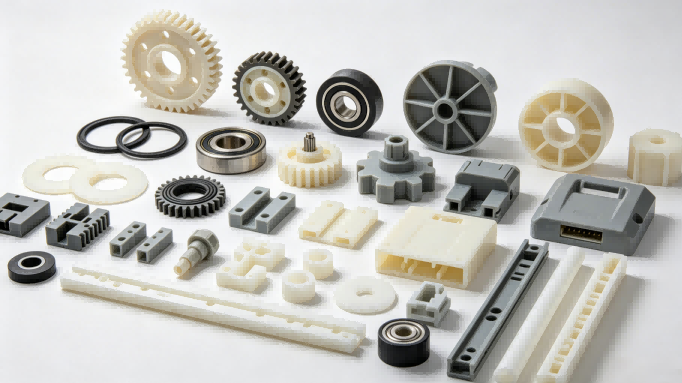
These methods serve different manufacturing purposes. For example, a custom plastic gear may be CNC machined for an initial functional test, 3D printed to evaluate a revised geometry, and eventually injection molded when the design and production quantity are confirmed.
Injection Molding: Best for Consistent Plastic Production at Scale
Injection molding is one of the most widely used processes for manufacturing plastic components in large quantities. Its main advantage is repeatability: once the mold and processing parameters have been properly established, the same tooling can produce a large number of parts with consistent geometry and appearance.
The process begins with mold design and fabrication. Plastic resin is heated until it reaches a molten state, then injected into the mold cavity. After cooling, the component is ejected, inspected, and prepared for any required secondary operations.
Key advantages of injection molding include:
- Lower unit costs at higher volumes: The initial mold investment can be distributed across many parts, reducing the tooling cost allocated to each unit.
- Consistent part quality: A qualified mold and controlled production process help maintain repeatable dimensions and product appearance.
- Material flexibility: A wide range of thermoplastics can be considered, including ABS, PP, PC, PA, POM, and selected engineering plastics, depending on the application.
- Complex part geometry: Ribs, bosses, mounting features, clips, and other molded details can often be integrated into one component.
- Scalable production: The process is suitable for repeat orders and ongoing manufacturing programs.
However, injection molding also involves upfront tooling costs. Mold design, fabrication, testing, and approval take time. If a product is still undergoing major design changes, modifying an existing mold can be more expensive and time-consuming than revising a digital model or machining a new prototype.
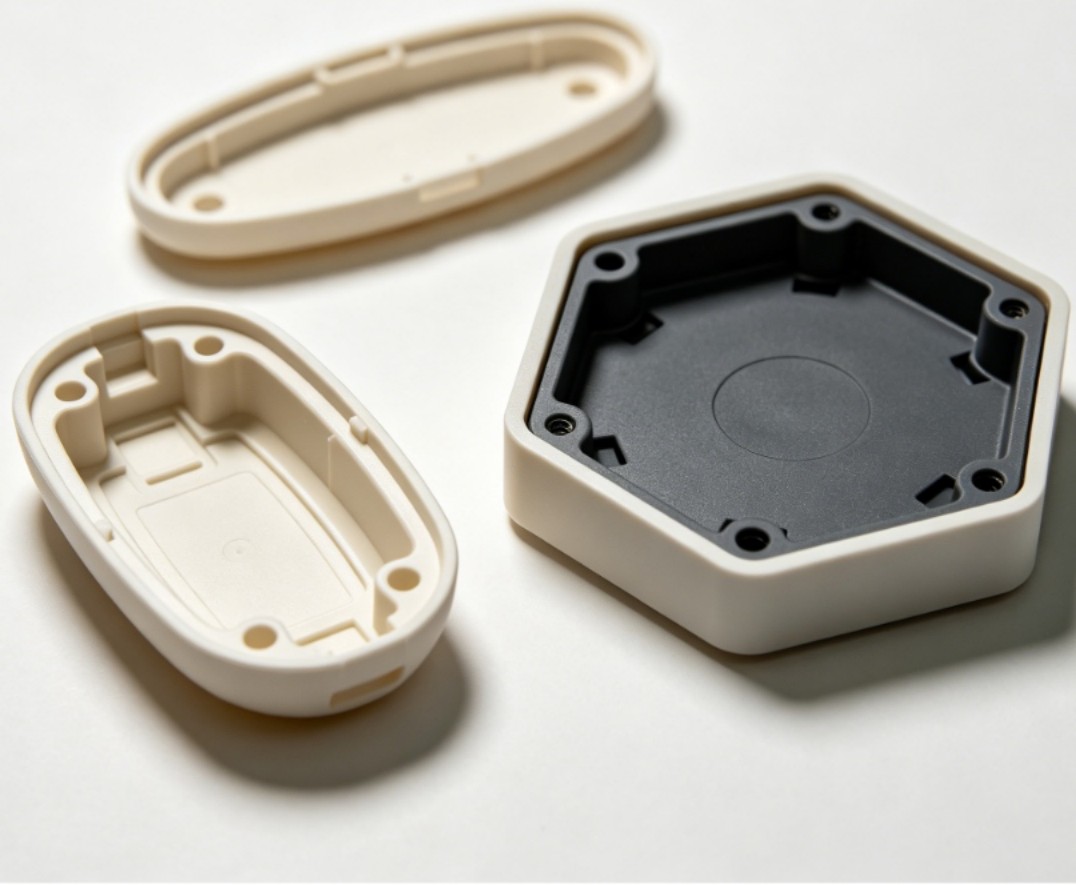
Injection molding is particularly suitable for plastic enclosures, electronic housings, automotive components, industrial equipment parts, and other products that require repeatable production.
Yistar provides plastic injection molding, mold development, product customization, and assembly. Its custom plastic components for consumer electronics include housings, buttons, brackets, connector housings, and internal structural parts. The company also lists surface finishing options such as painting, in-mold labeling, and vacuum metallization.
CNC Machining: Best for Precision Parts and Low-Volume Production
CNC machining is a practical choice when a project requires accurate plastic components without the initial investment in injection mold tooling. It is especially useful during product development, functional testing, and low-volume production.
Unlike injection molding, CNC machining starts with a solid piece of plastic material. The machine follows programmed tool paths to cut, drill, mill, and shape the workpiece according to the engineering drawing or CAD model.
Key advantages of CNC machining include:
- No injection mold required: Parts can be manufactured directly from plastic stock, avoiding conventional injection tooling costs.
- Good dimensional control: CNC machining can achieve tight tolerances when the material, geometry, machine setup, and inspection requirements are properly managed.
- Flexible material selection: Different machinable engineering plastics can be selected according to strength, wear resistance, chemical resistance, and operating conditions.
- Design flexibility: Changes can often be made by updating the CAD model and machining program rather than modifying a production mold.
- Suitable for functional prototypes: Machined parts can be used to evaluate dimensions, assembly fit, and certain mechanical properties.
There are also limitations. CNC machining removes material from a larger block, which can result in material waste. Deep cavities, thin walls, and complex internal geometries may require special tooling, multiple setups, or additional machining operations.
In addition, the cost per part is closely related to machining time, material consumption, setup requirements, and finishing operations. For large production quantities, injection molding may become more economical.
For example, industrial plastic gears, rollers, bushings, bearing components, and precision brackets may be manufactured through CNC machining when the required quantity or design makes machining a practical option.
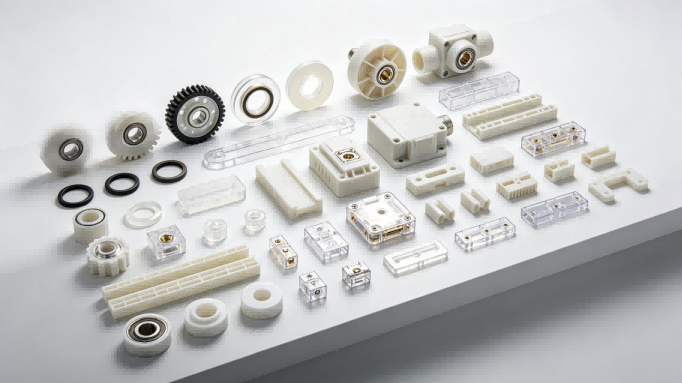
Yistar's custom CNC machined and injection molded engineering plastic parts cover components such as gears, rollers, bearings, washers, bushings, and linear guides. The product information lists materials including POM, PA6/PA66, HDPE, UHMWPE, ABS, and PEEK.
3D Printing: Best for Rapid Prototyping and Design Flexibility
3D printing has become an important manufacturing option for product developers because it can produce physical parts directly from digital design files without conventional mold tooling.
The process builds a part layer by layer. Depending on the selected technology, materials may be deposited, cured, or fused to form the final geometry. Common 3D printing technologies include FDM, SLA, and SLS, each with different material characteristics, surface quality, and application requirements.
Key advantages of 3D printing include:
- Rapid design iteration: Engineers can revise a CAD model and produce another prototype without rebuilding an injection mold.
- No conventional mold tooling: This makes it useful for early-stage development and small quantities.
- Complex geometries: Certain internal channels, lattice structures, and organic shapes can be produced more easily than with conventional machining or molding.
- Low-volume flexibility: It can be suitable for one-off parts, design samples, and limited production runs.
- Design validation: Physical prototypes help teams check product appearance, dimensions, assembly relationships, and selected functional requirements.
However, 3D printing is not automatically the best option for every functional plastic part. Printed components may have visible layer lines, require post-processing, or show direction-dependent mechanical properties depending on the printing technology and material. Production speed and unit cost can also become less attractive when quantities increase.
Another important consideration is material equivalence. A printed prototype may not behave exactly like an injection molded production part, even when the material names appear similar. If a component must withstand heat, impact, repeated loading, or chemical exposure, its final performance should be validated using the intended production material and process.
For this reason, 3D printing is often most useful during early design development rather than as a direct replacement for every injection molded component.
Injection Molding vs CNC Machining vs 3D Printing: Key Differences
The following comparison summarizes the main differences between the three manufacturing processes. Actual results depend on part geometry, material grade, dimensional requirements, production quantity, and supplier capabilities.
| Comparison Factor | Injection Molding | CNC Machining | 3D Printing |
|---|---|---|---|
| Manufacturing method | Molding | Subtractive | Additive |
| Tooling requirement | Production mold required | Cutting tools and fixtures | No conventional mold |
| Initial investment | Generally higher due to mold tooling | Generally lower without mold tooling | Generally lower for initial samples |
| Unit cost at high volume | Often the most economical | Can be relatively high | Can be relatively high |
| Design changes | May require mold modification | Usually requires a new machining program | Usually requires a revised digital file |
| Production consistency | High after process qualification | Depends on setup and inspection | Depends on technology and process control |
| Complex geometry | Good for moldable features | Limited by tool access and geometry | Excellent for many complex shapes |
| Typical applications | Mass-produced plastic components | Precision parts and prototypes | Prototypes and complex low-volume parts |
There is no universal production quantity at which one process always becomes cheaper than another. The break-even point depends on the mold investment, part size, machining time, material costs, printing technology, and expected order volume.
For a more detailed look at the cost relationship between machining and molding, see Yistar's guide to CNC machining vs injection molding.
How Does Production Volume Affect Manufacturing Costs?
Production volume is often the first factor to consider when choosing between injection molding, CNC machining, and 3D printing.
Injection molding requires an initial investment in mold design and fabrication. This means the first batch carries both tooling and production costs. As the quantity increases, the mold investment is spread across more parts, and the unit cost can decrease significantly.
CNC machining does not require a conventional injection mold, so it can be more economical for small quantities. However, each part still requires machining time, material, and potentially multiple operations. The unit price therefore does not usually fall as sharply as injection molded production when order quantities increase.
3D printing also avoids conventional mold investment. It can be attractive for early prototypes and small batches, especially when the design changes frequently. However, printing time and post-processing requirements can make it less economical for large quantities of identical parts.
Consider the following general decision guide:
- One-off prototypes or very small quantities: 3D printing or CNC machining may be appropriate, depending on the required material and functional performance.
- Small production batches: CNC machining can be a practical option when dimensional accuracy and engineering material selection are important. 3D printing may suit complex geometries or frequently changing designs.
- Growing production demand: Compare the total cost of CNC machining or 3D printing against the cost of prototype or production tooling.
- Large, repeat orders: Injection molding is often the preferred option when the design is stable and the tooling investment can be justified.
The best comparison should include more than the quoted unit price. Buyers should consider tooling, material waste, secondary operations, inspection, assembly, packaging, and the expected lifetime production volume.
Which Process Offers Better Precision and Surface Finish?
Precision is not determined by the manufacturing process alone. Part geometry, material behavior, machine capability, mold quality, processing parameters, and inspection methods all affect the final result.
CNC machining can achieve tight dimensional tolerances because cutting tools remove material according to programmed tool paths. It is particularly useful for parts with precision holes, flat surfaces, slots, and features that need accurate fitting during assembly.
Injection molding offers strong repeatability after the mold and process have been validated. However, plastic shrinkage, warpage, gate location, wall thickness, and cooling conditions must be considered during mold design and process development.
3D printing can produce detailed geometries, but the dimensional accuracy and surface finish depend on the printing technology, layer height, material, build orientation, and post-processing. Some printed parts may require sanding, polishing, or other finishing operations.
For engineering plastic components, Yistar's published product information lists CNC-machined and injection-molded precision parts with a stated accuracy of ±0.05 mm. This is a product-page specification, not a universal tolerance for every material, geometry, or production process. Critical dimensions should always be reviewed against the actual engineering drawing and project requirements.
When requesting a quotation, identify the dimensions that are functionally critical instead of applying an unnecessarily tight tolerance to every feature. This helps the manufacturer assess the production method and inspection requirements more accurately.
How Do Material Options Differ Across the Three Processes?
Material selection is another important factor because the same plastic grade may behave differently depending on how it is processed. The final choice should be based on the component's mechanical loads, operating temperature, chemical exposure, wear conditions, and required service life.
For injection molding, commonly used thermoplastics include:
- ABS: Often selected for housings, covers, and components requiring a balance of impact resistance and appearance.
- Polypropylene (PP): Used in various consumer and industrial products where chemical resistance and low weight are relevant.
- Polycarbonate (PC): Considered for applications requiring impact resistance and dimensional performance.
- Nylon (PA6/PA66): Commonly used for mechanical components where strength and wear performance are important.
- POM: Often selected for gears, bushings, rollers, and sliding components because of its dimensional stability and low-friction characteristics.
- PEEK: A high-performance engineering plastic considered for demanding thermal, mechanical, or chemical environments.
CNC machining can work with a range of machinable plastic stock materials, including engineering plastics such as POM, nylon, HDPE, UHMWPE, ABS, and PEEK. The material should be available in a suitable stock form and compatible with the required machining operations.
3D printing uses materials designed for specific printing technologies. Depending on the process, these may include PLA, ABS-like photopolymers, nylon-based powders, and other specialized materials. Their performance should not automatically be treated as equivalent to a molded or machined grade with a similar material name.
Yistar's engineering plastic product range specifically lists POM, PA6/PA66, HDPE, UHMWPE, ABS, and PEEK. For applications involving industrial equipment, custom plastic components for industrial machinery include products such as gears, bearing retainers, casters, seals, pump bodies, and guide rail sliders.
When Should You Choose Injection Molding?
Injection molding is generally the better choice when the product design is stable, the required quantity is sufficient to justify tooling, and consistent production quality is important.
Consider injection molding when:
- You need a large quantity of identical plastic parts.
- The product design has been reviewed and is unlikely to change significantly.
- You require consistent dimensions and appearance across repeated orders.
- The part needs integrated features such as ribs, bosses, clips, or mounting structures.
- You want to reduce the unit cost over a longer production program.
- The product requires a specific molded surface texture or appearance.
Typical examples include electronic enclosures, automotive interior components, plastic housings, industrial equipment parts, and consumer product components.
For these projects, mold design and manufacturability review are important before production tooling begins. Wall thickness, draft angles, gate locations, parting lines, cooling, and ejection should be evaluated to reduce potential defects and avoid unnecessary mold modifications.
When Should You Choose CNC Machining?
CNC machining is often a practical choice when a project needs a relatively small quantity of accurate plastic parts, particularly when the design is still being evaluated or the material must come from a specific stock grade.
Consider CNC machining when:
- You need prototypes or a limited batch before committing to production tooling.
- The component requires accurate holes, slots, flat surfaces, or other machined features.
- The design may still change during development.
- You need a machinable engineering plastic that is available in stock form.
- The component geometry is accessible to CNC cutting tools.
- The cost and lead time of injection tooling cannot yet be justified.
For industrial applications, CNC machining can also be useful for replacement components, maintenance parts, custom mechanical elements, and low-volume equipment components.
When Should You Choose 3D Printing?
3D printing is particularly useful when speed and design flexibility are more important than achieving the lowest possible unit cost at scale.
Consider 3D printing when:
- You need to evaluate a product concept before choosing a production process.
- The design is still changing and several iterations are expected.
- You need a small number of samples for visual or assembly checks.
- The component includes complex internal or organic geometries.
- You want to validate the overall form before investing in conventional tooling.
For example, an engineer developing a new electronic enclosure may use 3D printing to check the overall shape and the positioning of buttons, connectors, and internal components. After the design is confirmed, CNC machining or injection molding can be evaluated for functional validation and production.
However, if the prototype is intended to validate heat resistance, impact performance, long-term wear, or other demanding mechanical requirements, the test material and manufacturing process must be selected carefully. A visually accurate printed sample does not automatically represent the performance of the final molded product.
Can You Combine 3D Printing, CNC Machining, and Injection Molding?
Yes. These processes do not have to be treated as competing alternatives. In many product development projects, they can be used at different stages to reduce risk and improve manufacturing efficiency.
A practical development route may look like this:
Design exploration with 3D printing
Start with a digital model and produce early samples to evaluate the overall shape, assembly layout, and design concept. Revise the CAD file as necessary before moving forward.
Functional validation with CNC machining
Once the geometry becomes more stable, machine selected components from an appropriate engineering plastic. This can help evaluate dimensions, fit, and material-related performance before production tooling is committed.
Production with injection molding
After the design, material, and manufacturing requirements have been confirmed, develop the production mold and establish the molding process for repeat orders.
This staged approach can reduce the risk of making expensive tooling changes too early. It also allows engineers to use the most suitable process for each stage instead of forcing one method to handle every requirement.
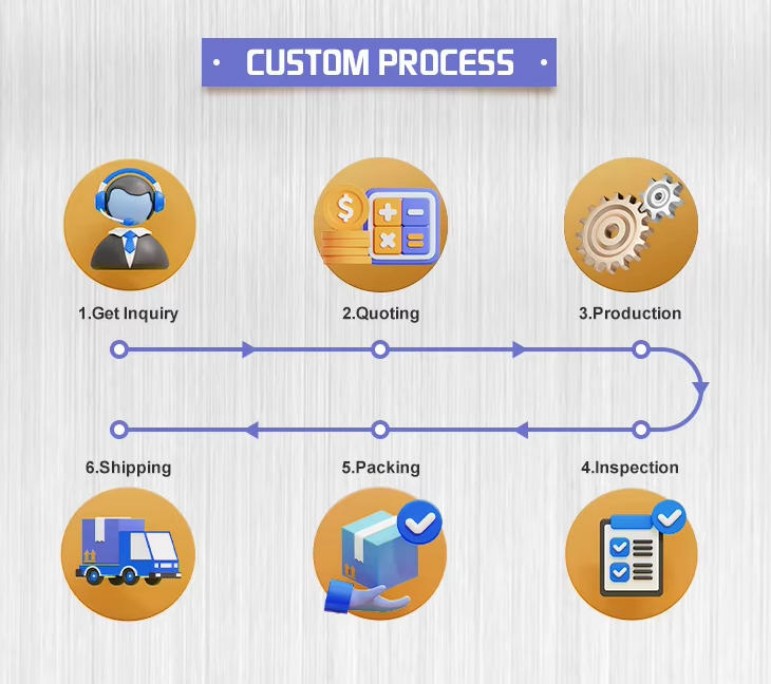
Yistar's manufacturing offering includes custom sampling, small-batch trial production, mold development, injection molding, and assembly. Its published customization process also outlines technical drawing confirmation, sample production, mass production, inspection, assembly, packaging, logistics, and after-sales service.
How to Choose the Right Manufacturing Process for Your Project
Before requesting a quotation, it is helpful to evaluate the project from both an engineering and purchasing perspective. The following questions can make the selection process more straightforward.
What is the expected production quantity?
Estimate both the initial order and the expected annual demand. A small first batch does not necessarily mean the product will remain low-volume throughout its lifecycle.
Is the product design finalized?
If the design is still changing, consider a process that allows flexible revisions. Committing to production tooling before confirming the design can create additional costs later.
What material properties are required?
Identify the operating temperature, mechanical loads, chemical exposure, wear conditions, and any regulatory requirements. Material selection should be based on the real operating environment rather than appearance alone.
Which dimensions are critical?
Identify the features that affect assembly, movement, sealing, or product performance. These dimensions may require tighter tolerances and more detailed inspection.
What surface finish is expected?
Consider whether the component requires a smooth cosmetic surface, a molded texture, transparent appearance, coating, printing, or another finishing treatment.
What is the actual delivery deadline?
Compare the time needed for design review, sample production, tooling, testing, mass production, and shipping. The fastest method for making a first sample may not be the fastest route to a qualified production batch.
For a more detailed explanation of the molding workflow, read Yistar's injection molding process guide.
Why Work with Yistar for Custom Plastic Manufacturing?
Selecting a manufacturing process is only one part of a successful project. The supplier must also understand the engineering drawings, material requirements, dimensional specifications, production targets, and quality expectations.
Xiamen Yistar Precision Manufacturing Co., Ltd. is a plastic manufacturing company based in Xiamen, China. According to its company profile, Yistar was founded in 1995 and specializes in plastic injection molding, mold development, product customization, and assembly.
The company's published manufacturing capabilities cover custom plastic components for smart home products, consumer electronics, automotive applications, medical devices, industrial equipment, and daily necessities.
Yistar also lists supporting services such as custom sampling, small-batch trial production, painting, silk screening, laser marking, and surface treatment. Its engineering plastic product information includes both CNC machining and injection molding options for customized components.
For customers developing plastic parts, this combination can help connect early-stage component requirements with tooling and production planning. The appropriate manufacturing process should still be evaluated according to each project's drawings, material specifications, expected quantities, and performance requirements.
If you are comparing injection molding, CNC machining, and 3D printing for a new plastic component, prepare your technical drawing, material preference, estimated quantity, and any special requirements before requesting a manufacturing assessment.
Visit Yistar's Contact Us page to discuss your custom plastic manufacturing project.
Frequently Asked Questions About Injection Molding, CNC Machining, and 3D Printing
Which is better: injection molding, CNC machining, or 3D printing?
There is no single best process for every project. Injection molding is generally suitable for repeatable, higher-volume plastic production. CNC machining is useful for precision components, prototypes, and low-volume production. 3D printing is often preferred for rapid prototyping, design iteration, and complex geometries.
Which manufacturing process is the cheapest for plastic parts?
The lowest-cost option depends on production quantity, material, part geometry, tooling investment, and finishing requirements. 3D printing or CNC machining may be more economical for small quantities, while injection molding often offers a lower unit cost when production volume is high enough to justify the mold investment.
Is CNC machining more accurate than injection molding?
CNC machining can achieve tight dimensional tolerances on suitable geometries, while injection molding offers strong repeatability after tooling and process qualification. The actual accuracy depends on the part design, material, equipment, processing conditions, and inspection requirements.
Is 3D printing suitable for mass production?
3D printing can support certain production applications, but it is not always the most economical option for large quantities of identical plastic parts. Printing time, material cost, post-processing, and required mechanical performance should be evaluated against CNC machining and injection molding.
Can injection molding and CNC machining be used for the same plastic component?
Yes. A component may be CNC machined during prototyping or low-volume production and later injection molded when the design is stable and the expected quantity justifies tooling. The transition requires a review of material, geometry, tolerances, and moldability.
What information is needed to get a custom plastic parts quotation?
Prepare a technical drawing or 3D CAD file, material requirements, estimated order quantity, critical dimensions, surface treatment requirements, and any special application conditions. These details help the manufacturer evaluate the process and provide a more relevant quotation.
Can Yistar provide both CNC machining and injection molding?
Yistar's published engineering plastic product information lists both custom CNC machining and injection molding for plastic components. The suitable process and production arrangement should be confirmed according to the project's technical requirements.